
The Eye Setter
A historical horror story: Some fires can't be outrun.

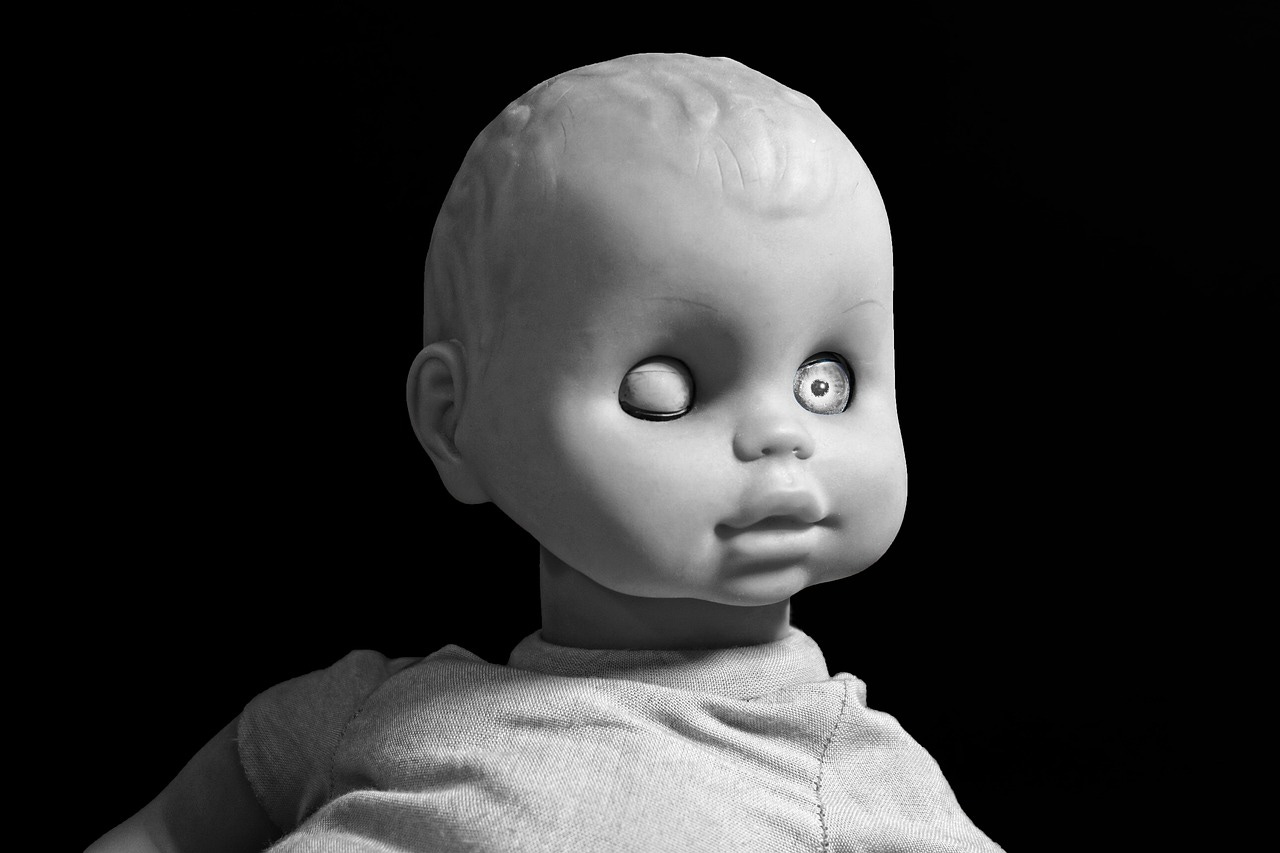
Ivorine, they called it. Imitation ivory for piano keys, picture frames, cheap jewelry, carved fans. It was really celluloid, and it would catch fire fast if you weren’t careful. Jeannie was sick of being careful. She’d taken a job with American Celluloid just after high school, sorting carved beads into boxes, until eventually they bumped her up to running the machine that kneaded celluloid dough. The factory had a million rules, and if you broke one even once, they’d can you on the spot. One spark was all it would take to turn an ordinary workday into hell on earth.
Still, Jeannie was sick of the rules, the noise, the fumes.
“What do you think would shut us down first?” Lois joked as they stood in line to buy tickets to see Rebecca. “A fire or a government ban?”
“That ain’t funny, Lois,” Jeannie said, turning her head and clamping her mouth shut tight as a cough ripped through her throat. The nitric acid from the factory stung when you breathed it in. Everyone on the factory floor had a cough that wouldn’t go away, unless they were new to the job.
The chasing marquee lights glowed against the royal blue of the twilight. Jeannie breathed in the warm, buttery scent of popcorn and looked forward to sinking down into a plush theater seat.
In the end, Jeannie didn’t wait for a government ban or fire to shut down American Celluloid. She found a job at a doll factory and handed in her notice.
“We don’t use celluloid anymore,” her new boss said during her interview. “We used to make self-walking dolls from celluloid, but every Christmas, the newspapers run articles telling parents not to buy celluloid toys because of the fire hazards. And then Ideal started using hard plastic. What could we do? We had to join the modern era.”
Jeannie remembered those walking dolls. They had molded hair and cherubic faces, and a string with a lead weight attached. Instructions on the back of the box showed you how to pull the string to make the doll walk across a table. Her little cousin got one for Christmas one year, and his mother snatched it away when she caught him holding it over a lit candle. He’d wanted to see if it would light up from the inside.
On her first day at Lazarus Toys, Paul showed her how to run the eye setter. He smiled, revealing a row of tobacco-stained teeth, and set six rubber heads into the machine — two rows of three. Then he loaded six sets of shiny, plastic eyes and pulled a lever. There was a pfft of compressed air and a heavy thump as the machine jammed eyes into all six heads at once.
“Just make sure you don’t mix up the eye colors,” Paul said, laughing, slightly handsome despite his shorn white hair and brown teeth. “They don’t want heads going out of here with one blue eye and one green eye. That happened once, and the foreman hit the roof.”
Jeannie loved the new job. The eye setter wasn’t as loud as the roaring machinery at the celluloid factory, not even by half. No fumes from the nitric acid, no constant threat of fire. She settled into the ritual of loading the machine, pulling the lever, and carefully setting the completed heads in boxes to be shipped across town, where they’d be put on plastic bodies and packaged for sale.
Sometimes, when the painters had finished adding color to the dolls’ lips, cheeks, and eyebrows, and strung the eyeless heads on a rack facing a window, the light would shine through the eyes with an eerie glow, especially in the late afternoon when the sun went white. It made her shiver a little.
“So it’s a little spooky,” she told herself. “So what? Better than burning alive, making Ivorine.”
Three weeks after Jeannie started at Lazarus Toys, Lois joined her there. Paul trained Lois on the hair rooting machine, sewing plastic auburn hair into rubber scalps. After a few days, Lois could root three heads per minute.
“Paul says I could move up and be one of the costume seamstresses,” Lois told Jeannie one evening after work. “But I’m afraid I’d go blind, sewing those tiny little seams.”
They sat at a bar, their feet resting on the brass rail that ran along the bottom. Every time someone opened the front door, a triangle of faded light stretched across the floor, highlighting the hexagonal tiles in the floral pattern.
“What about you?” Lois asked after a pause. “If you were to move up, what would you want to do?”
Jeannie shook her head, her pin curls trembling. “I’m happy with what I’m doing,” she said. “It’s easy and the pay is good.”
Lois was quiet as she caught the bartender’s eye and held up her empty glass. He returned moments later with another Manhattan.
“Did you hear about the musician who lit himself on fire?” Lois asked as she dipped her finger in her glass to fish out the cherry.
“No,” Jeannie said.
“He was a jazz musician in some honky tonk. A bit of hot cigarette ash fell on the keys, right on middle C, and the fire just ripped in both directions, all the way to the ends of the keyboard. I’m sure they’ll ban Ivorine after that.”
“I don’t want to hear this,” Jeannie said. Besides, Jeannie thought, they hadn’t banned celluloid even after it burned kids at Christmas. Why would some government interlopers care about some jazzer in a rundown bar, who was probably half in the bag at the time?
“Look, Lois, we both have better jobs now, don’t we? Let’s just be glad and move on with our lives.”
“We have better jobs,” Lois said, dropping the denuded cherry stem onto her cocktail napkin, “But we still have friends at American Celluloid. I do, anyway.”
After three months at the doll factory, Jeannie’s efficiency had increased from six heads per minute to two dozen, and the company gave her a five-cent-per-hour raise. One morning, she heard two men arguing and glanced up at the catwalk where the foreman stood with a man in a dark suit, someone she’d never seen before.
“I get ten cents for every dozen heads I ship out of here,” the foreman said. “It’s in my contract.”
“You’ll be paid,” the suit-man said.
“I’d like to know when.”
The suit-man turned to leave and the foreman followed him, the two of them disappearing through a door that led into the stairwell.
Jeannie ignored the tendril of dread that began coiling in her insides and turned back to her work.
In November, the foreman said they’d have to double their output to meet the Christmas rush, and soon they were waist-deep in boxes. One evening, minutes before quitting time, Paul collapsed, clutching his arm, his lips bluish-purple, just like the doll’s taffeta party dress.
An ambulance pulled up outside the factory, its siren glowing through the tall windows, the drying doll heads’ eyes flashing red.
In January, frost covered some of the factory’s window panes, turning the tall glass grids into crossword puzzles. Work had slowed down. Jeannie figured they’d be back to their regular output after Christmas, but she could swear she was doing a little more than half of what they’d been doing before. She now found herself having to wait for heads to come off the drying rack before she could put them in the eye setter. Sometimes, she sat, staring at the heads on the drying rack, watching the afternoon light change through their empty sockets.
One evening, as sleet hit the factory window panes and lined the street below with slush, Jeannie heard the foreman and the suit-man going at it again on the catwalk. Jeannie wondered why they didn’t have this conversation in an office somewhere, why they always had to shout at each other on the catwalk where everyone on the factory floor could see and hear them.
The room was quiet, except for the hum of a few Singer sewing machines. Jeannie and Lois were busy packing costumes while they waited for heads to dry.
“You owe me even more than you did before,” the foreman said. “How many times do I have to tell you, it’s in my contract. You have to pay me. If you don’t, I’ll drag you to court. See those hair-rooting machines? Those are mine, remember? I agreed to lend them to you. If you don’t pay me, I’ll take my machines and leave.”
Lois and Jeannie traded glances. Jeannie looked down at the pair of tiny ice skates she held in her hand and tucked them into a box with a red velvet skating dress with silver rickrack just above the hem.
“Like hell you will,” the suit-man shouted.
“Who’s going to stop me? You?” The foreman laughed and vanished through the stairwell door. The suit-man followed.
After work, sleet sliced through the streetlamp’s shafts of amber light. Jeannie walked the six blocks from the streetcar in ankle-deep slush until she stood outside the three-story brick building where she lived.
“Oh, hell,” she said, realizing she’d left her purse at the factory. She rushed back to the streetcar and waited impatiently for twenty minutes, shifting her weight from foot to foot as the cold slush killed the feeling in her toes.
Finally, she returned to the factory and raced to the floor, but stopped cold. Everything was gone. Everything. The sewing machines, the hair-rooting machines, the eye setter, the boxes of heads ready to ship, the costumes, painted heads on the drying rack. A single green eye stared up at her from the wooden floor. She bent to pick it up and slipped it into her pocket.
She told herself there must be some kind of mistake. They had moved it all and would put it back in the morning. When she got to work tomorrow, they’d give her a new address, that was all. A new factory.
In a break room just off the factory floor, she found her purse and headed for the door. She smelled smoke, and when she opened the door, she found red flames inching toward her, eating the hallway floor along the way.
Jeannie slammed the door shut and ran, the metal stairs leading up to the catwalk ringing as she raced to the landing. Her heart thundered as she gripped the catwalk rail and looked down at the smoke rolling in under the door. Panicking, she found the stairwell door and ran up, grabbing the first door handle she saw. The handle wouldn’t budge. Sweat rolled down her back, and the stairwell blurred. She ran up another flight of stairs, where an identical door waited. She tried the handle, and when it wouldn’t move, she threw herself against it.
A cough ripped through her lungs, and she crumpled, sinking to the floor with her back against the locked door. She heard a strange sound, like someone laughing…she told herself it wasn’t real, but it seemed to get louder and louder.
Finally, a distant voice called, “Is anyone here? Call out!”
Then, she heard it again, closer this time: “Fire department! Call out!”
“I’m here!” she screamed, “In the fourth-floor stairwell!”
Just as she got the words out, another coughing fit took over her body. She swore she tasted blood.
She heard heavy footsteps. A fireman appeared in the stairwell and helped her to her feet. With his halligan, he pried open the locked door and led her to a window where a ladder was waiting with another fireman already on it, who showed her how to climb down.
“Is anyone else in the building?” the fire chief asked once she was on the ground, standing next to the hook-and-ladder, watching flames stretch the length of the factory windows.
“No,” Jeannie said. “I don’t think so.”
The chief gave an order, and the firemen turned the water on.
It was past midnight when Jeannie finally made it home. She sat at her kitchen table and reached into her pocket, feeling something round and smooth. She took it out and looked down at a plastic eye: sea green with a pale pink lid and a row of plastic lashes. She set it on the table and let it stare back at her.
It’s ironic, she thought. I quit American Celluloid, and my job still went up in flames.
She flicked the eye and watched it roll across the table.
E.S., I saw this in the New Yorker and thought you might find it interesting. It has a lot of cool historical stuff about the evolution of dolls in the US.
https://www.newyorker.com/magazine/2026/02/16/playmakers-the-jewish-entrepreneurs-who-created-the-toy-industry-in-america-michael-kimmel-book-review
I think that doll in the header image was in one of the Toy Story movies.
I had to look up what a halligan is.
I know you said there is a Mad Men connection, but I don't know what it is. It's been a long time since I watched that. Looking forward to learning the connection.