
Chop Suey
Part 1

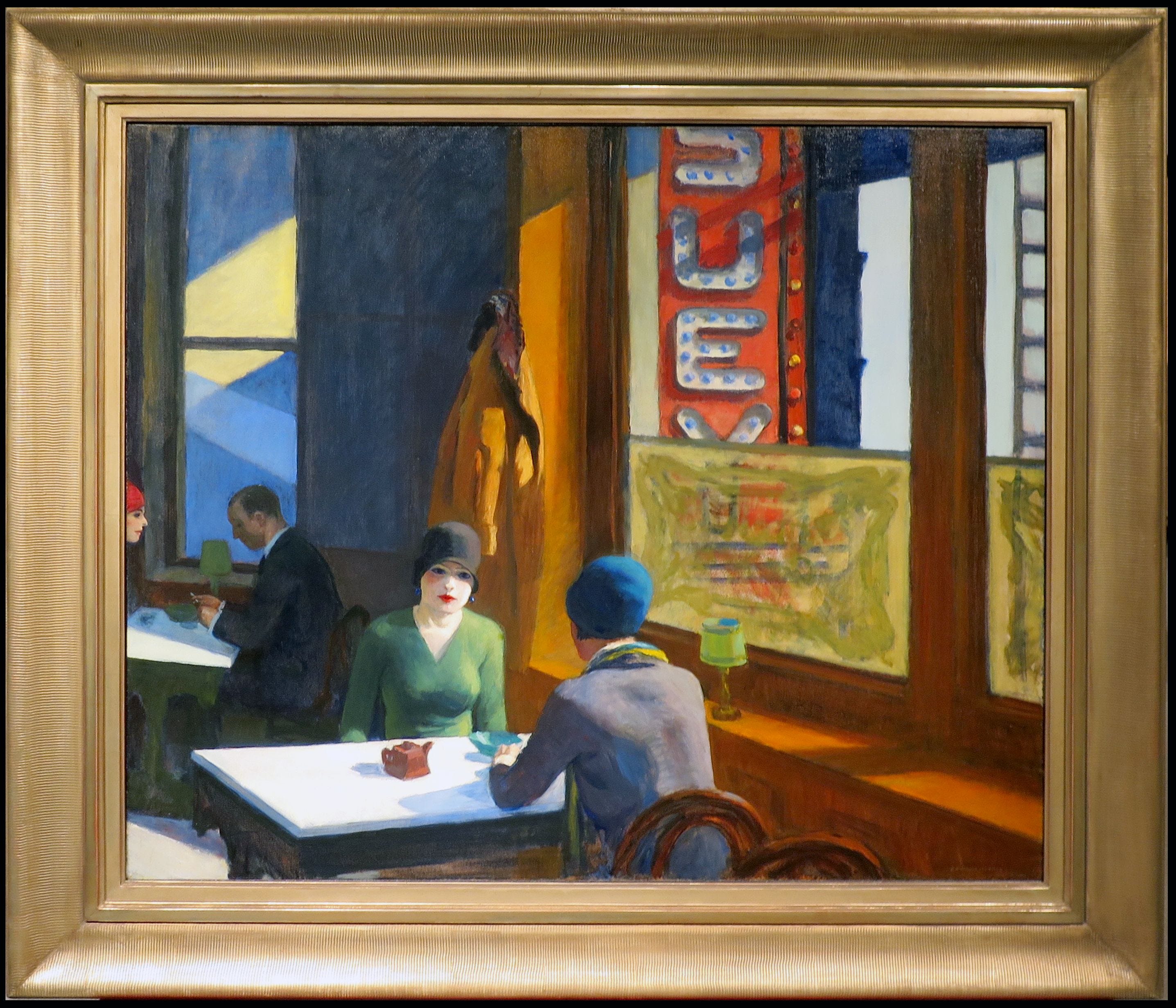
Mollie pulled up her fur-trimmed collar as she glanced out into the street, hoping for a glimpse of the streetcar. She missed her hair. Bobs were fashionable, but they sure weren’t much good in the wintertime. It was a snow-bright day with a clear blue sky and a thick blanket of fresh powder covering the streets. Christmas was days away, which meant she’d have a little time off from her job as a stenographer at a downtown law firm.
Finally, she heard the clattering of the streetcar and smiled brightly at the conductor as she stepped inside. Her smile faded the second she heard someone call her name and turned to see who it was: Alta Anderson, an old friend from Edison High. As far as Mollie was concerned, the word “friend” could be stricken from the record.
“Sit with me,” Alta said, pulling her shopping bags onto her lap. A thick braid snaked around Alta’s head, and her red wool coat was just as out of style as her hair. “Do you have plans for New Year’s Eve?” Alta asked. Before Mollie could answer, Alta went on: “Clayton’s taking me to the Nankin Cafe. Dick Long’s orchestra will be there, and we’re going to dance the night away.”
Isn’t that just the way to spend New Year’s Eve, Mollie thought. Dancing the foxtrot with a gut full of chop suey.
“You’ve been to the Nankin Cafe, haven’t you? Oh, it’s marvelous. It has a wide staircase with a beautiful green carpet. Whenever I walk down it, I feel like I’m making a grand entrance.”
“I hear they had a staircase like that on the Titanic,” Mollie said.
“And the food — have you ever had anything like it? So exotic!”
“If you like celery,” Mollie replied.
“And my Clayton. Isn’t he just the handsomest man who ever lived?”
“Sure. Who needs Rudolph Valentino when you’ve got Clayton?”
Why didn’t I walk home? Mollie wondered. It’s just a few blocks.
Alta went on talking, but Mollie was no longer listening. Her mind drifted back to the book-lined office where she worked. The firm had several court dates in January and she was going to be very busy. A cold tendril of dread sprouted in her mind and she willed it to die. Mollie, she thought, you only have a few days off. You will not waste them wishing you had more.
Alta was saying something about a ruby on a silver chain when Mollie reached for the bell pull.
“I’m terribly sorry, Alta. This is my stop. We’ll catch up another time.”
Mollie hurried off the streetcar before Alta could say another word. After the streetcar pulled away, Mollie walked along Oak Grove Street, past St. Mark’s Cathedral with its Gothic tower and several grand old houses.
Mollie’s building was new, one of three identical blond-brick apartment houses with iron balconies on the front and glass double doors that looked in on gleaming brass mailboxes and a marble staircase. Her apartment was small but had everything a modern girl could want: a kitchenette, a Murphy bed she could tuck into the wall when she had company, and a small dressing room with a vanity table, full-length mirror, and plenty of space for her stacks of hatboxes. In the basement, there was a delicatessen and a boiler the size of a bus, which meant she could buy a pound of salami without ever leaving the building, and soak in a hot tub as long as she liked.
Once she reached her apartment, she collapsed onto the Murphy bed and pried off her shoes. She felt the creeping of the cold tendril again and squeezed her eyes shut. Don’t you know you’re lucky? That job means you can afford this apartment. You have enough money to go to shows, to eat at restaurants. You can live a life your mother could have only dreamed of. So what if you’ll be putting in long hours in January, and the partners will be particularly short-tempered?
The phone rang. Mollie peeled herself off the bed. Her black Bakelite candlestick phone sat on its own skinny table. She’d wanted one of those benches with a seat on one end and a telephone table on the other, but they were too big for her apartment.
“I was just calling to see if you’d made plans for New Year’s Eve,” said Mollie’s friend, Mary.
“Can’t say as I have,” she replied.
“How about coming with me to Nankin Cafe to see Dick Long’s orchestra?”
Mollie’s lip curled. She sighed and leaned against the wall.
“What?” Mary asked. “What’s the matter?”
Why didn’t anyone ever want to take the streetcar out to Lake Minnetonka, drink champagne in the snow, watch fireworks glitter over the ice?
“If we go, we’ll run into Alta Anderson and listen to her go on and on about her fiancé while she prods him like a side of beef.”
“What’s eating you?” Mary laughed.
“Nothing!”
“If you say so, but it sounds like a whole lot of sour grapes to me.”
“It’s not. I just don’t like her bragging.”
“So are you coming with me to the Nankin on New Year’s Eve or what?”
“I suppose so,” Mollie said. “You know,” Mollie added, “He only likes her because he thinks she comes from money.”
“What are you talking about?”
“Alta. I was there when they met last summer at a Millers’ game. He mistook her for somebody he’d read about in the society pages, and she didn’t correct him. I think that’s why she boasts so much. She knows the whole thing is phony, and that’s why she needs other people to be jealous. She feeds off it. People who are really happy don’t care how others feel about it.”
“So you admit you’re jealous,” Mary said.
“No! That’s not it.”
“Whatever you say,” Mary said. “I still say it’s sour grapes.”
That night, Mollie lay awake thinking about what Mary had said. Mollie didn’t want Clayton or anyone like him. She didn’t want to be Alta, content to be Daddy’s pet and then some man’s property.
So, then, why was Alta’s constant crowing so irritating?
Mollie got out of bed. From her windows, she could see the backside of some old mansions on the other side of a high retaining wall. There was no alley between her building and those stately homes. If she wanted to visit one, she had to walk to the end of the block, turn the corner, and go uphill.
As she stood at the window, she noticed a light glowing in a carriage house behind one of the mansions. Strange, Mollie thought. She knew the old lady who lived in that mansion, and she lived there alone. There was an entire wing of that house she never used, and the carriage house was full of broken wheels, old gasoliers, and other dusty things no one had any use for. So why would there be a light on in it in the middle of the night?
Check back next week for Part 2.
Looking forward to Part 2! I recommend listening to the linked audio of Dick Long's orchestra as you read. And the notes there explain a bit about the orchestra and the Nankin cafe.
This brought back memories of listening to 78rpm records as a kid (this would be early 60s). Some of those were in multi-disk albums because they were symphonies or concertos. They sounded much like the linked recording. The record players could turn at 3 (sometimes 4) speeds -- 78, 45, and 33 1/3. A few supported 16 2/3, though I never saw a record that could be played at that speed.
Of course, as a kid, we experimented with playing the records at the wrong speed.